Adult anchor text strategy: what to ask for, and what to leave alone
Adult anchor text strategy comes down to one question: who chose the words? Branded and URL anchors, descriptive anchors on your own site, and why exact-match anchors on paid links are the clearest sign of a scheme.
By the AuthorityReachUK research desk · 6 minute read ·
Inside: The short answer · Types of anchor · Why exact-match anchors are the problem · The adult-specific rule · Reviewing your own anchor profile · Where descriptive anchors belong
The short answer
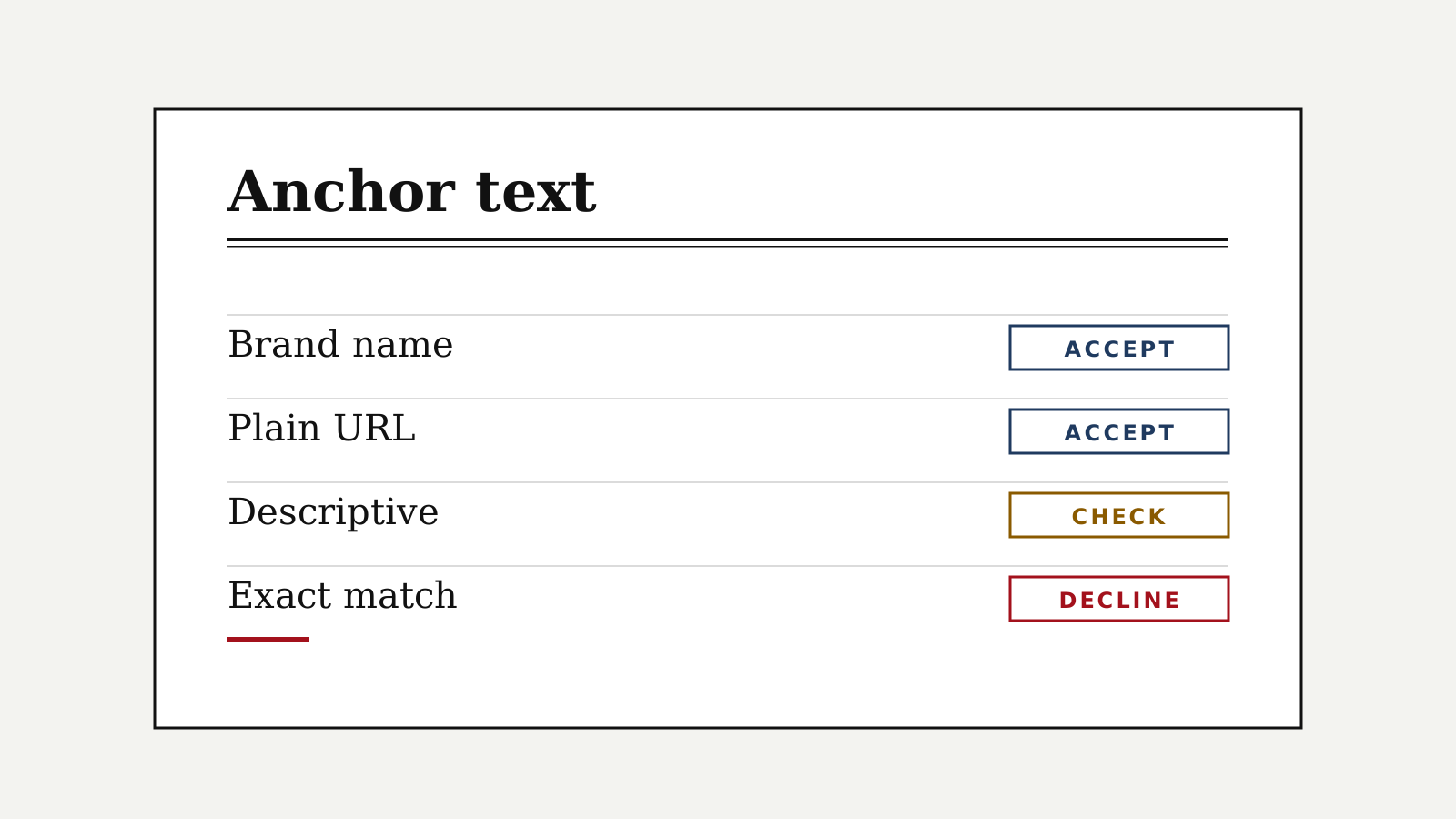
Anchor text is the clickable wording of a link. On links from other sites, the safest anchors are the ones an editor would write without being asked: your brand name, your web address, or the title of what they are citing. Keyword-rich anchors on links you arranged or paid for are the clearest sign of a link scheme. On your own site, descriptive anchors are exactly what Google recommends.
Types of anchor
| Type | Example | On links from other sites |
|---|---|---|
| Brand | "ExampleBrand" | Safe and natural |
| Plain URL | "examplebrand.com" | Safe and natural |
| Title of the resource | "the 2026 creator payments survey" | Safe; what editors usually write |
| Generic | "this report", "their website" | Harmless; tells search engines little |
| Partial match | "a guide to cam site crawling" | Fine when the editor chose it |
| Exact match | "best adult SEO agency" | Risky, especially on arranged or paid links |
"ExampleBrand" and the survey are made-up examples.
Why exact-match anchors are the problem
Google's spam policies1 name links with optimised anchor text in articles, guest posts or press releases distributed on other sites as a link scheme, alongside large-scale guest posting with keyword-rich anchors. The reason is simple: editors rarely link to a business using the exact phrase that business wants to rank for. When many links do, someone other than the editor chose the words.
Google has targeted over-optimised link profiles since its Penguin update in 2012, and its systems now aim to ignore links that look manipulative. At best, keyword anchors bought for rankings are wasted money.
The adult-specific rule
For adult brands there is a second reason to keep anchors plain. Mainstream publishers are far more willing to link to a brand name or a neutral description than to explicit wording, and an explicit anchor on a general site makes a placement look exactly like what it is. Brand and resource anchors get accepted more often and age better.
When you pitch, do not specify anchor text at all unless the publisher asks. If they do, offer your brand or the resource title. Editors trust pitches that do not try to control their copy. More on pitching in adult outreach.
Reviewing your own anchor profile
Export the anchors pointing to your site from a backlink tool and group them by type. A natural profile is usually led by brand and URL anchors, with a spread of titles and generic phrases. If exact-match keywords make up a large share, the links behind them deserve a closer look.
- Check where the keyword anchors come from, using the quality checklist.
- Where you arranged them and can, ask for the anchor to be changed to your brand, or for a sponsored attribute to be added.
- Most low-quality links are simply ignored by Google; disavowing is for clear, deliberate schemes you cannot remove.
Where descriptive anchors belong
On your own site, use descriptive anchors freely. Google's guidance on links recommends anchor text that tells readers, and search engines, what the linked page is about. Internal links are where you choose the words, and where keyword-relevant anchors are expected.
How we handle anchors in guest content is set out on adult guest posts, and the wider standard on adult link building.
Readers ask
Q. What anchor text should I ask publishers to use?
A. Usually your brand name, your URL, or the title of the resource they are citing. Let the publisher choose the words where you can; natural anchors are what an editor would write anyway.
Q. Can I use keywords in anchor text on my own site?
A. Yes. For internal links, Google recommends descriptive anchor text that tells readers what they will find. The concern is with keyword anchors on links from other sites, especially paid ones.
Q. Should anchors on adult links avoid explicit words?
A. Yes. Publishers are far more likely to accept a link with a brand or neutral description, and explicit anchors on mainstream sites make the placement look like exactly what it is.