Adult digital PR ideas that journalists can actually use
Adult digital PR ideas that work are almost never about the product. Data only you hold, a clear view on new rules such as UK age checks, and safety stories, plus the ideas that tend to backfire.
By the AuthorityReachUK research desk · 7 minute read ·
Inside: The short answer · 1. Data only you hold · 2. Regulation explainers · 3. Expert commentary · 4. Safety and wellbeing · Making a survey credible · Ideas that backfire
The short answer
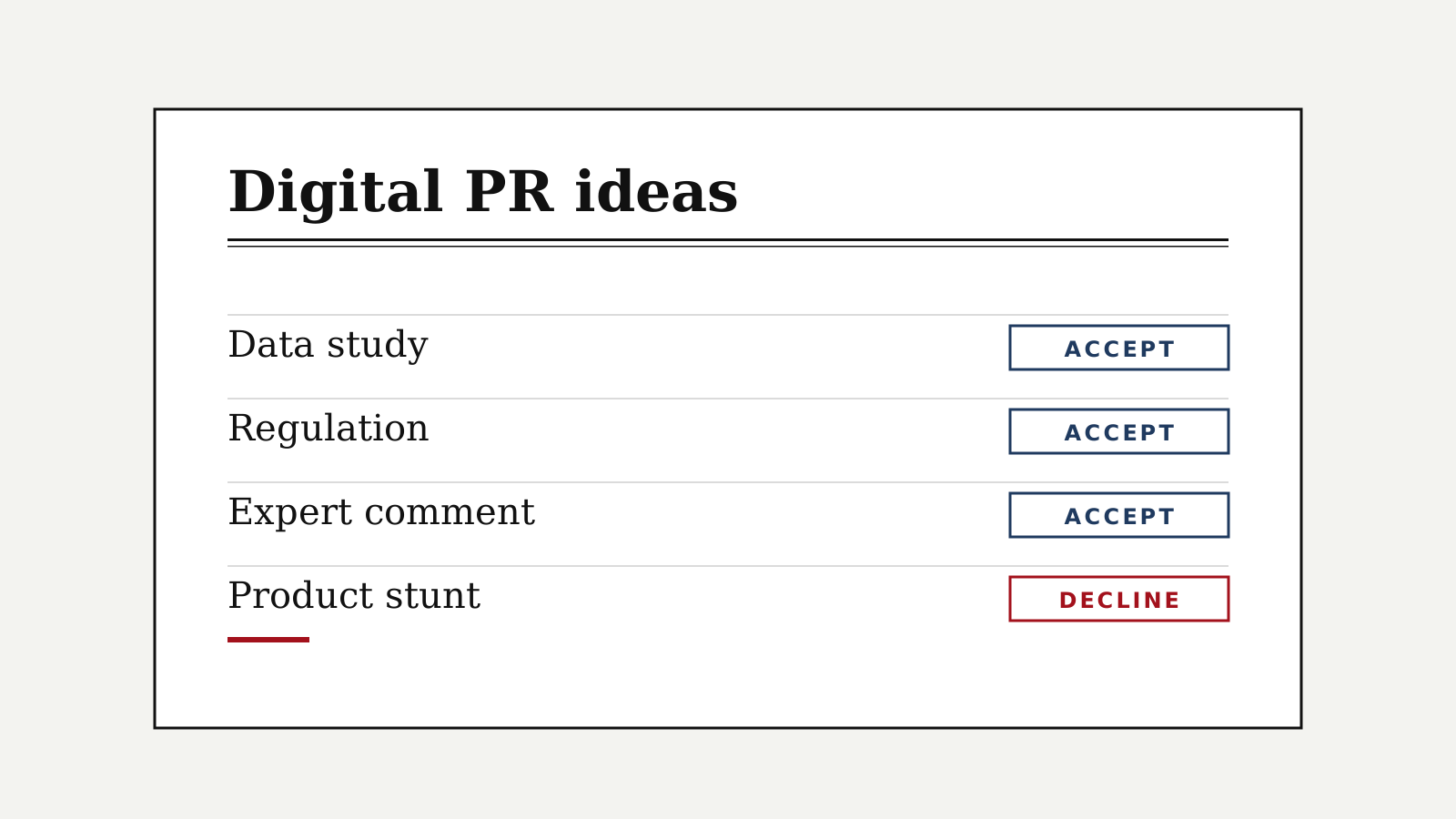
The adult digital PR ideas that get covered are almost never about the product. They are about something only the business knows, from anonymised trends in its own data to a practical view on a new law, or they help readers stay safe. Four kinds of idea tend to work. A few others tend to backfire, however tempting they look.
1. Data only you hold
Platforms and larger sites sit on anonymised data that journalists cannot get anywhere else. Aggregated and handled carefully, it can answer questions readers are curious about.
- How browsing or spending patterns shift by time of day, season or region.
- Which payment methods customers choose, and how that has changed.
- How earnings are spread across creators or performers on a platform.
- What people search for on your site, grouped into safe, non-explicit themes.
Publish only aggregated figures that cannot identify a customer or performer, and check the plan against your privacy notice and UK GDPR before anything leaves the building.
2. Regulation explainers
New rules create questions that reporters need answered quickly. In the UK, services that allow pornography have had to use highly effective age assurance since 25 July 2025 under the Online Safety Act1, and Ofcom2 can fine non-compliant services up to 10 per cent of qualifying worldwide turnover or £18 million, whichever is greater.
Brands that have implemented age checks can explain what changed for users, what worked, and what the privacy trade-offs are. The same approach works for age verification laws in US states, card network rules and data protection decisions.
3. Expert commentary
Reactive comment is the fastest route to coverage: a named spokesperson who can explain a story within hours of it breaking. Good topics for adult businesses include payments and banking access, deepfakes and consent, data breaches, online harassment, and the economics of the creator industry.
The spokesperson needs to be available, on the record, and able to speak plainly. A short list of pre-approved views on likely stories makes a response possible on deadline, and our outreach team can place it with the right reporters.
4. Safety and wellbeing
Guides and campaigns that help people stay safe are among the few adult-brand stories that mainstream outlets link to happily. Examples include consent education, how to report non-consensual imagery, protecting privacy when paying online, and safety guidance for performers and venue staff. They also build the reputation that makes every later pitch easier.
Making a survey credible
Surveys are popular in digital PR and easy for journalists to dismiss. A credible one publishes its method: who ran the fieldwork, the sample size, the dates, how respondents were chosen and the exact question wording. Following a recognised standard, such as the Market Research Society's code of conduct in the UK, helps. A poll of 200 site visitors presented as "Britain thinks" does lasting damage.
Ideas that backfire
- Stunts built on explicit imagery, which most outlets will not run or link to.
- Rankings of "the kinkiest city" and similar clickbait, which win a day of coverage and a lasting reputation problem.
- Commentary tied to tragedies or crimes, which looks exploitative however well meant.
- Anything involving real public figures without their consent.
How we turn ideas into campaigns is set out on adult digital PR, and who to pitch them to in adult publisher outreach. Links earned this way are also judged by our quality checklist.
Readers ask
Q. What makes a data study credible to journalists?
A. A clear method: where the data came from, the sample size, the dates, how it was anonymised and the exact questions if it was a survey. Following a recognised code such as the Market Research Society's helps.
Q. Is the UK age verification change still a story?
A. Yes, for the right angle. Since 25 July 2025, services that allow pornography have had to use highly effective age assurance for UK users. Practical questions about privacy, accuracy and user behaviour still interest reporters.
Q. Should adult brands try publicity stunts?
A. Rarely. Stunts that rely on shock tend to win a day of coverage and a long tail of reputational damage, and many outlets will not link to them. Useful information travels further.