Adult backlink quality checklist: how to judge a site before it links to you
An adult backlink quality checklist in five checks: a real audience, editorial control, topic fit, honest labelling and no network ties. What to look for, and the signs that a site only sells links.
By the AuthorityReachUK research desk · 7 minute read ·
Inside: The short answer · Check 1: a real audience · Check 2: editorial control · Check 3: topic fit · Check 4: honest labelling · Check 5: no network ties · Scoring and keeping records
The short answer
An adult backlink is worth having when it comes from a site with real readers, an editor who can say no, content that fits your subject, honest labelling of anything paid, and no ties to a network built to sell links. With practice, the five checks take minutes per site. They save you from links that look impressive in a tool and do nothing, or worse, in search.
Check 1: a real audience
A site with readers has pages people search for that have nothing to do with links. Look at what it ranks for in a tool of your choice, and at whether those pages cover its own subject rather than a mix of unrelated sponsored topics.
- Good sign: steady search visibility for the site's own subject, recent articles with comments or shares.
- Warning sign: traffic that fell sharply after a Google update, or visibility only for the sponsored posts.
Check 2: editorial control
Someone should decide what gets published, and be able to refuse. The quickest test is to read the last twenty posts.
- Good sign: a consistent voice, named authors, articles that were clearly commissioned for the readers.
- Warning sign: a price list for posts, and a recent archive that jumps between casinos, crypto, health supplements and adult content with a link in every piece.
A "write for us" page is not a problem in itself. A page that lists prices but no standards is.
Check 3: topic fit
Every link should make sense to the readers of the page it sits on. For adult brands, the natural fits are sites about the industry itself, sex and relationships, nightlife, technology and payments, online safety and regulation, and local news for physical venues.
Mainstream sites that happen to accept adult links for a fee, on pages unrelated to their own subject, fail this check even when their authority scores look high. Where sponsored links sit inside existing articles, see guest posts versus niche edits.
Check 4: honest labelling
Google's spam policies1 say that buying links is normal advertising as long as the link carries a nofollow or sponsored attribute. Paid articles whose links pass ranking credit are named as a link scheme.
- Good sign: the site labels sponsored content on the page and uses rel="sponsored"2 for paid links.
- Warning sign: an offer of "dofollow, no sponsored tag, looks natural". That is a description of a scheme, and in the UK an unlabelled paid article can also breach advertising rules.
- Also check the anchor: keyword-rich anchors on paid placements are a further red flag, as explained in anchor text strategy.
Check 5: no network ties
Link networks are groups of sites run to sell or swap links. Google's policies list excessive link exchanges, partner pages built for cross-linking, and links spread across the footers or templates of many sites.
Several sites with the same design or theme, the same writers, the same contact email, or the same outbound links in every post. Footer lists of "partner sites". An offer of placements on "our 40 sites".
Scoring and keeping records
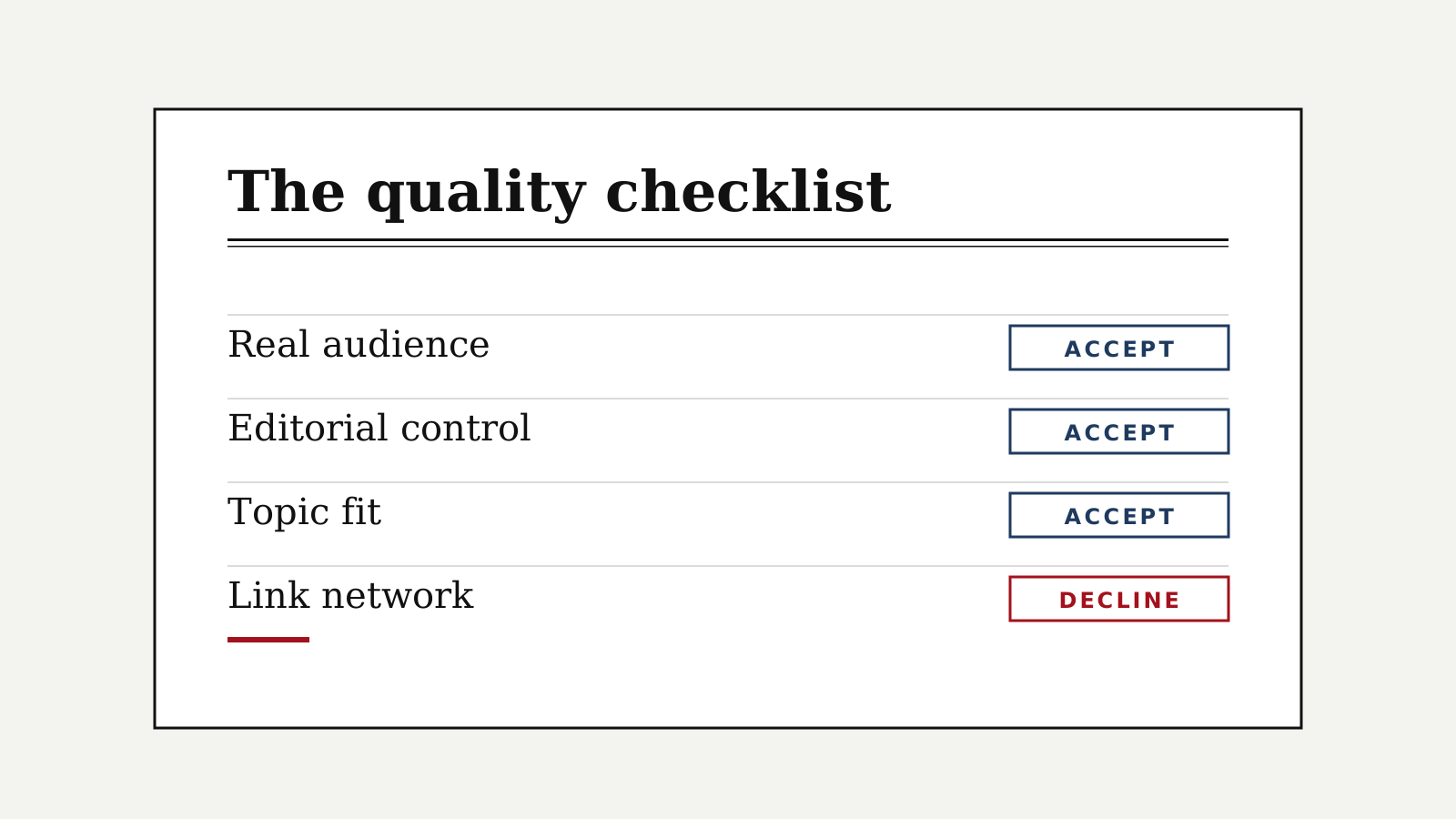
A site needs to pass all five checks. Four out of five is still a decline, because the failed check is usually the one that matters. Record every decision, with the reason, so you are not re-checking the same sites every month and can show anyone who asks how each link was chosen.
That record is what our placement ledger is for, and it drives every campaign of publisher outreach. The checklist is the standard behind our adult link building, and finding sites worth checking is covered in backlink gap analysis.
Readers ask
Q. Is domain authority a good quality signal?
A. On its own, no. Third-party authority scores can be inflated by the same kind of links Google ignores. Use them to sort a list, then check the site itself.
Q. How do I spot a link network?
A. Look for sites that share a design, an owner, the same writers or the same outbound links, and that link to each other in footers or partner pages. Google lists widely distributed footer and template links as a link scheme.
Q. Should I avoid sites that have a "write for us" page?
A. Not automatically. The question is whether they turn anyone down. A page with prices and no editorial conditions is a warning sign; a page with clear topics and standards is not.